Field notes
Limits are real. The method is how you meet them with eyes open.
Ridgework spends capacity on the day that matters. Easy volume is most of the week because that is what the endurance papers keep finding. If a session is wrecked or something hurts, the next days are rewritten from that log.
Composite field notes from coaching patterns.
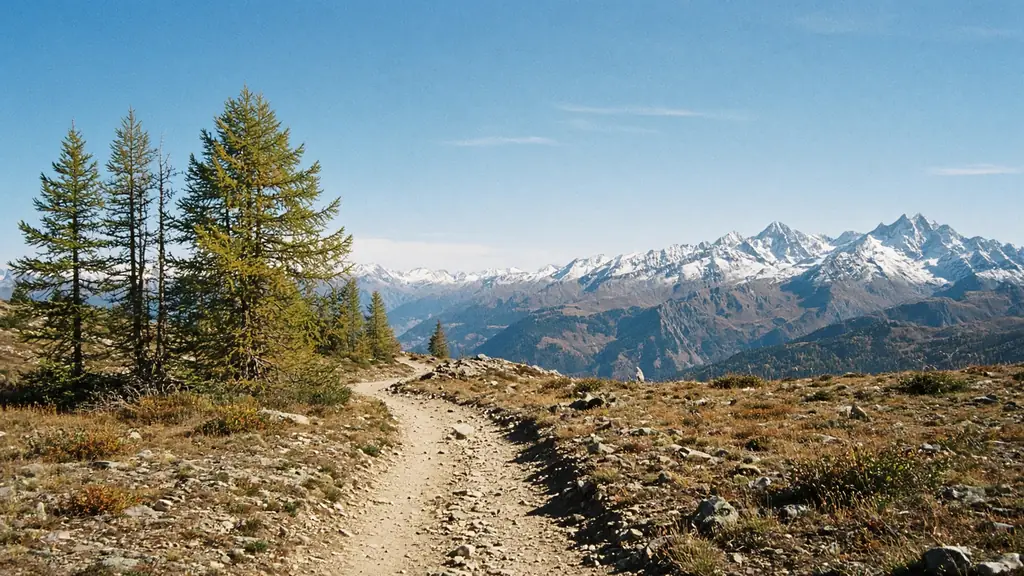
First 50 km
Composite examplePre-Alpine trail, late September
The limit was arriving intact, not running faster than the week allowed
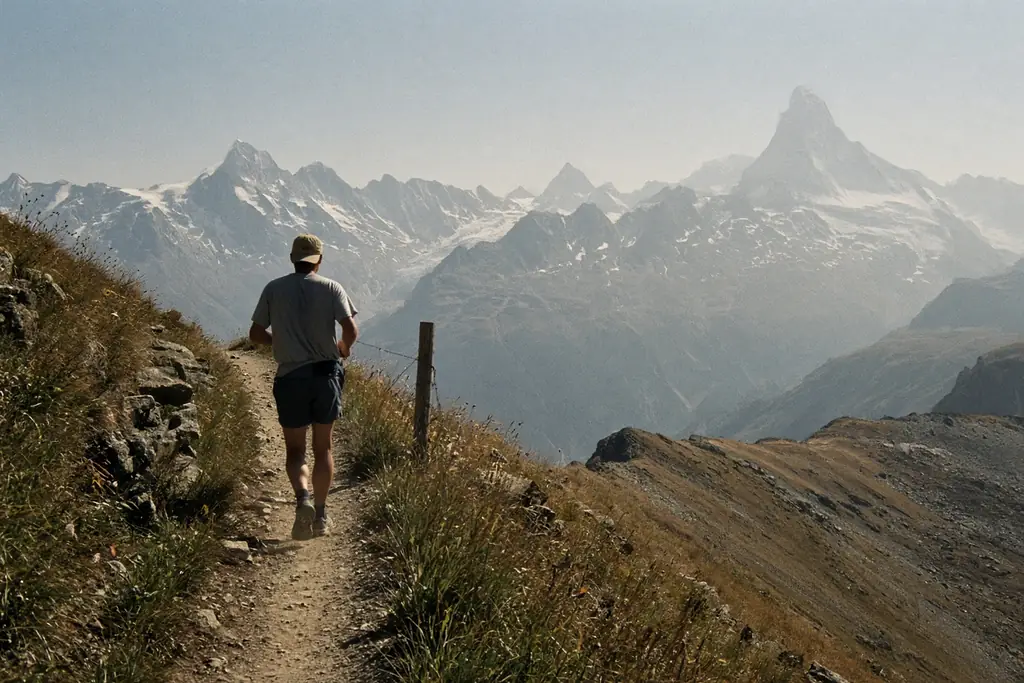
Week 5 was not a hero session. It was an easy Tuesday, because sleep had already spent the quality.
M. is 44, teaches, and trains around term time. The objective was a first 50 km on rolling trail — finish well, not a time. We set a talkable-easy week as the default hypothesis: most sessions conversational, one quality dose, a long run that grew by minutes rather than by theatre.
That pattern is the one Seiler and Kjerland quantified in well-trained endurance athletes: about three-quarters of sessions clearly easy, a small share truly hard, surprisingly little sitting on the threshold. It is not a law of nature. It is a starting map you can adjust when the terrain and the life in the week disagree.
In week 5 the sleep collapsed — parenting, not injury. The midweek check is the whole method in miniature. Session RPE and a one-line readiness note said the quality session would have been junk intensity dressed as work. We turned it easy. The long run stayed. The 50 km still happened.
Finish was ordinary. Fueling held. No collapse, no story for a feed. The limit M. pushed was completing a long day inside a life that is not a training camp. That is what “toward your own limits, inside realism” looks like on a school-term calendar.
Note
Backing off a quality session is not leaving capacity on the table. It is how the easy volume that actually accumulates is allowed to remain easy.
Sources
Seiler & Kjerland 2006; Seiler 2010; Esteve-Lanao, Foster, Seiler & Lucia 2007 — more time in the easy zone tracked with better running performance than piling work into the middle.
Alpine weekend
Composite exampleMixed snow and rock, Écrins-style weekend
They climbed the week. The hard Tuesday was the trap, not the col.
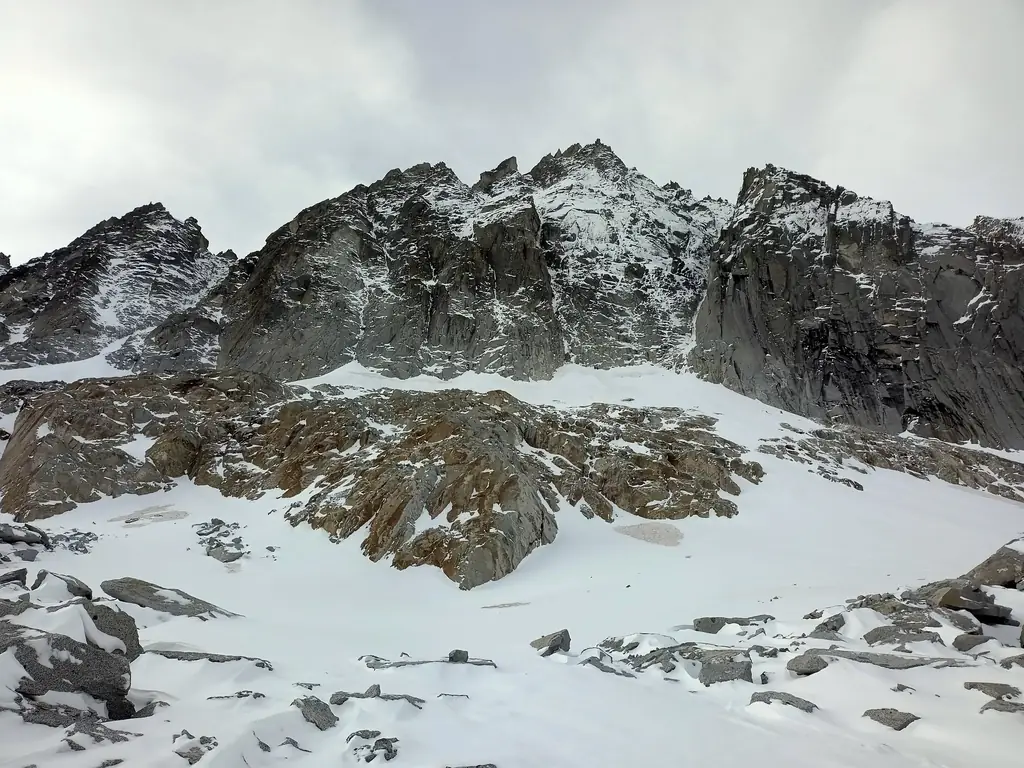
Tuesday vert was written. Sleep was already spent. Doing it anyway would have been commitment, not training.
A. had trained a mountain-specific week: conversational vert, one longer day. The alpine weekend was the peak of the block — a training objective, not a separate day-call product.
Midweek sleep collapsed. The written quality session was sitting there. Doing it because it was on the card is the commitment trap McCammon named: we said we were going, so we go. Fitness does not cancel that. Training does not either.
They turned the session easy. The long day stayed shorter. Legs were still used. The weekend still happened because Tuesday had not spent the reserve.
Pushing a limit inside realism is not always more work. Sometimes it is spending the week’s capacity on the day that matters, and training less when you are tired.
Note
Backing off a tired week is the method. The outing is the peak, not a hero Tuesday.
Sources
McCammon 2004 on heuristic traps (commitment, familiarity, expert halo). Bourdon et al. 2017 — load and readiness are planning inputs, not permission slips after you are already on the slope.
Hut to hut
Composite exampleHaute Route country, three huts
Three days linked because day two was allowed to change
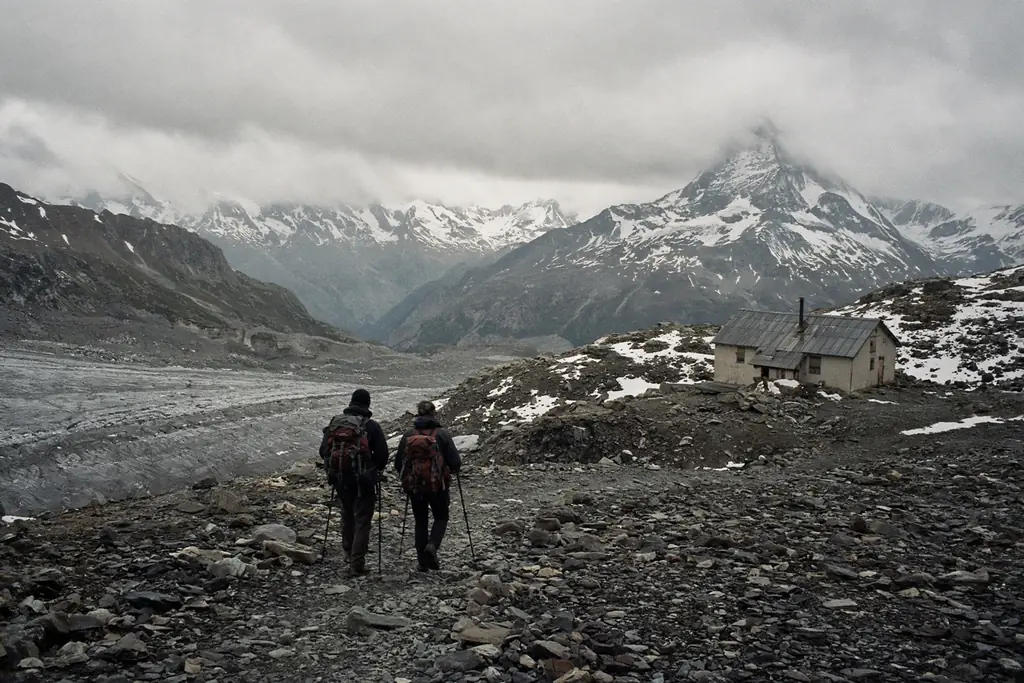
The taper was the last decision: volume down, one short sharpness, pack weight written. Day two still had to be called again.
L. is 38, first time linking alpine days. Ten days out, volume dropped about a third, one short sharpness session stayed, sleep outranked extra kilometres. That is Mujika and Padilla’s taper in checklist form: reduce the work, keep a little intensity, do not invent new stress.
Day one was honest. Day two grew a convective afternoon. They left earlier, cut a lake detour, arrived at the hut before the cells. The original line would have been a sunk-cost march under building weather — the same commitment trap as the weekend summit, stretched across a traverse.
Day three they still had legs. Not because the method is magic. Because day two was not allowed to spend the reserve that day three needed. The linked objective — three days, one pack, weather and kit already written — is a harder limit than any single summit photo.
This is the Ridgework claim, stated without theatre: you get closer to your own ceiling when the easy work stays easy, the hard work is actually hard, and the mountain day is allowed to become a different day when the card says so.
Note
A traverse is a sequence of decisions. The log after day one is part of the plan for day two — not a diary for later.
Sources
Mujika & Padilla 2003 on taper. Foster et al. 2001 — session RPE as a simple internal-load mark you can actually write down at a hut table.
Write this week
14 days free, no card. €19/month if you add one after. Cancel anytime.
Start 14 days free